Shipping Container Dimensions and Pallet Capacity
Internal dimensions, volume, payload and pallet and carton capacity for eight container types in one table, plus when a high cube actually pays off and why Euro pallets fit poorly in containers.
· 11 min read
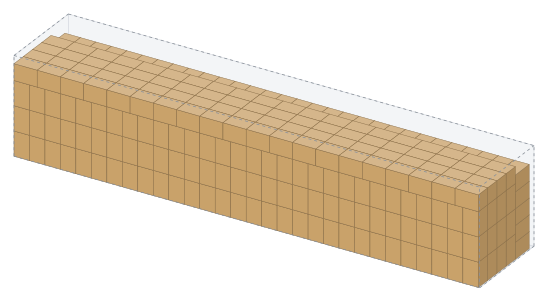
Here is the short answer on shipping container dimensions: a 20ft dry container measures about 5,898 × 2,352 × 2,393 mm inside, a 40ft is 12,032 × 2,352 × 2,393 mm, and a 40ft high cube is 12,032 × 2,352 × 2,698 mm. In a single layer on the floor, a 20ft takes 11 Euro pallets and a 40ft or 40ft high cube takes 25.
The table below covers eight common container types; the sections after it explain the numbers and what to watch for. For trailer and truck sizes, see the guide to vehicle and container internal dimensions.
What are the internal dimensions of each container type?
These are the numbers to plan with. Pallet and carton counts are based on dimensions only, in a single floor layer for pallets; check weight separately.
| Container | Internal L × W × H (mm) | Volume (m³) | Max payload (kg) | Euro pallets | Industrial pallets | Cartons |
|---|---|---|---|---|---|---|
| 20ft dry (DC) | 5,898 × 2,352 × 2,393 | 33.2 | 28,200 | 11 | 10 | 282 |
| 40ft dry (DC) | 12,032 × 2,352 × 2,393 | 67.7 | 26,700 | 25 | 22 | 590 |
| 40ft high cube (HC) | 12,032 × 2,352 × 2,698 | 76.4 | 26,500 | 25 | 22 | 700 |
| 45ft high cube | 13,556 × 2,352 × 2,698 | 86.0 | 27,700 | 27 | 24 | 778 |
| 20ft open top | 5,894 × 2,347 × 2,348 | 32.5 | 28,100 | 11 | 10 | 282 |
| 40ft open top | 12,029 × 2,342 × 2,347 | 66.1 | 26,500 | 25 | 22 | 590 |
| 20ft reefer | 5,444 × 2,294 × 2,276 | 28.4 | 27,400 | 10 | 9 | 262 |
| 40ft reefer high cube | 11,583 × 2,294 × 2,554 | 67.9 | 29,000 | 23 | 20 | 626 |
Assumptions: Euro pallet 1,200 × 800 mm (EN 13698-1), industrial pallet 1,200 × 1,000 mm, one floor layer with no gaps. Cartons are 600 × 400 × 400 mm, any orientation. Counts come from the StowCargo packing engine (October 27, 2026); volume is the product of the internal dimensions. Internal dimensions are typical and vary by a few centimeters between manufacturers, and in practice you may plan one row fewer for forklift and securing clearance. Each type has its own page with a layout drawing, such as 40ft high cube dimensions and capacity.
How do ISO 668 external dimensions differ from internal ones?
ISO 668 standardizes the outside of the box. The usable space inside is smaller by the thickness of the walls, floor and roof, so load plans always start from internal dimensions.
| Container | External, ISO 668 (mm) | Typical internal (mm) |
|---|---|---|
| 20ft standard | 6,058 × 2,438 × 2,591 | 5,898 × 2,352 × 2,393 |
| 40ft standard | 12,192 × 2,438 × 2,591 | 12,032 × 2,352 × 2,393 |
| 40ft high cube | 12,192 × 2,438 × 2,896 | 12,032 × 2,352 × 2,698 |
Going from outside to inside with these typical values, you lose 160 mm of length, 86 mm of width and 198 mm of height. The 86 mm sounds trivial, yet it is the number that decides how pallets fit. The height loss comes from the floor cross members and the roof structure.
The door opening is narrower and lower than the internal cross-section, so ask the carrier for the door dimensions when a machine or crate comes close to the roof.
20ft vs 40ft vs 40ft high cube vs 45ft: which should you book?
Cargo density and carton height decide it. Heavy, dense goods such as ceramics, stone and metal usually go in a 20ft, while bulky, light goods such as textiles, furniture and appliances go in a 40ft high cube. Among the dry containers in the table, the 20ft has the highest payload despite having half the volume of a 40ft.
40ft high cube dimensions: when does the extra height pay off?
A high cube is 2,896 mm tall outside versus 2,591 mm for a standard box. That 305 mm difference carries straight through to the inside (2,698 vs 2,393 mm), but it only helps if your cargo can use it for an extra layer.
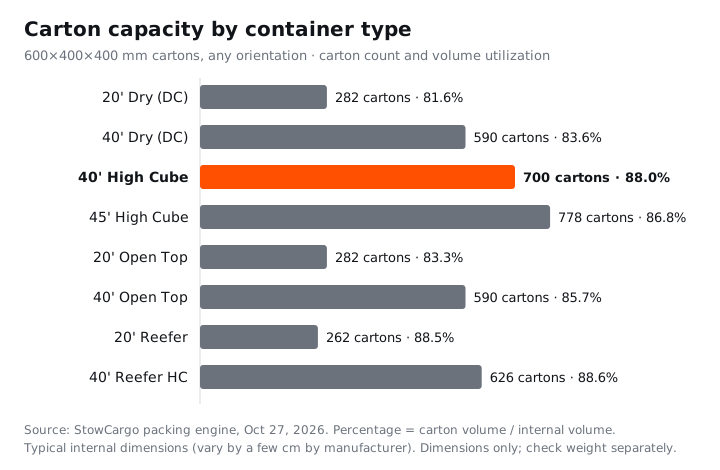
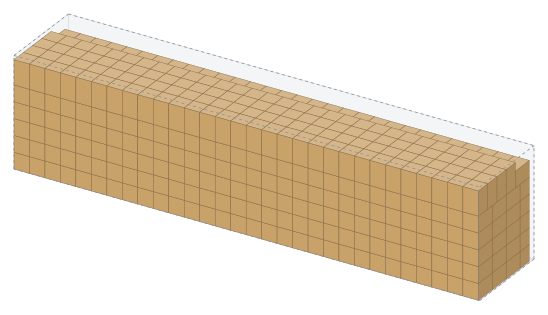
Cartons 400 mm tall stack 5 high in a 40ft dry container (2,000 mm, leaving 393 mm empty) and 6 high in a 40ft high cube (2,400 mm). That is why the engine's count rises from 590 to 700 cartons, 110 more or roughly 19%. It does not work for every carton. A 450 mm carton that must stay upright stacks 5 high in both, because 6 layers would need 2,700 mm and the high cube offers 2,698. Divide the internal height by your carton height to check before you pay for the taller box.
Pallets behave differently. The number of floor positions depends only on floor area, so a 40ft and a 40ft high cube both take 25 Euro pallets. The high cube helps when you double-stack: each loaded pallet must stay below 1,196 mm in a 40ft dry container and 1,349 mm in a high cube (half the internal height), and a little lower still to leave forklift lifting clearance.
When does a 45ft high cube make sense?
The 45ft high cube has the same cross-section as a 40ft high cube with 13,556 mm of length: 27 Euro pallets, 24 industrial pallets or 778 cartons. That is 2 Euro pallets and 78 cartons more than a 40ft high cube. It is common in European intermodal transport and for very bulky cargo. Europe also uses pallet-wide containers that are wider inside; if you work with those, get the exact width from the carrier instead of using the 2,352 mm in the table.
How many pallets fit in a 20ft and a 40ft container?
In a single floor layer, a 20ft container fits 11 Euro pallets or 10 industrial pallets. A 40ft or 40ft high cube fits 25 Euro pallets or 22 industrial pallets, and a 45ft high cube fits 27 Euro or 24 industrial. If the pallets can be double-stacked, the count can double, provided the height, pallet strength and payload allow it.
Why do Euro pallets fit worse in containers than in trailers?
It comes down to 128 mm of width. A 13.6 m curtainsider trailer is 2,480 mm wide inside; a dry container is 2,352 mm. Three Euro pallets side by side with their 800 mm edges across need 2,400 mm: that fits a trailer and misses a container by 48 mm.
So the best container layout uses two lanes. In one lane the pallets sit with the 1,200 mm edge across the width, in the other with the 800 mm edge across. Together the lanes take 2,000 mm and leave a 352 mm strip along the side wall. In a 20ft, the first lane takes 7 pallets (5,898 ÷ 800) and the second takes 4 (5,898 ÷ 1,200), for 11 in total. The same math gives 15 + 10 = 25 in a 40ft.
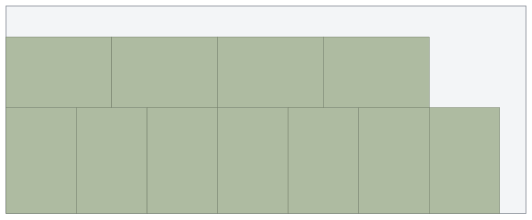
Floor coverage makes the gap clearer. In a 20ft, 11 Euro pallets cover 10.56 m² of a 13.87 m² floor, about 76%. In a 13.6 m trailer, 34 Euro pallets cover 32.64 m² of 33.73 m², about 97%. A 45ft high cube (13,556 mm) is almost as long as the trailer (13,600 mm) yet holds 27 Euro pallets instead of 34. See how many pallets fit in a truck for trailer counts and what a loading metre (LDM) is for how road freight prices floor space.
Why are reefer containers smaller inside?
Reefers have insulated walls and a cooling unit in the front wall, and both eat into the internal space. A 20ft reefer is 454 mm shorter, 58 mm narrower and 117 mm lower than a 20ft dry container. A 40ft reefer high cube is 449 mm shorter, 58 mm narrower and 144 mm lower than a 40ft high cube.
The effect on capacity: a 20ft reefer takes 10 Euro pallets instead of 11 and 262 cartons instead of 282, and a 40ft reefer high cube takes 23 Euro pallets instead of 25 and 626 cartons instead of 700. Cold air also has to circulate around the cargo, so never load above the load line marked inside the unit; it lowers your usable height below the table value. Copying dry container dimensions into a reefer plan is an easy mistake to make.
When should you use an open top container?
Open tops are for cargo that will not fit through the doors or has to be craned in from above: machinery, stone blocks, pipes and project cargo. The roof is closed with removable bows and a tarpaulin. Internal dimensions are very close to a dry container, and the pallet and carton capacity in the table is the same: 11 Euro pallets and 282 cartons in a 20ft open top, 25 Euro pallets and 590 cartons in a 40ft.
Cargo that sticks out above the top rails is out of gauge and needs carrier approval and separate pricing.
Does a container fill up by weight before volume?
For dense cargo, yes. Dividing the payload by the capacity tells you the average weight at which a container fills by weight before it fills by volume:
| Container | Max payload (kg) | Threshold per carton | Threshold per Euro pallet |
|---|---|---|---|
| 20ft DC | 28,200 | 100 kg (282 cartons) | about 2,564 kg (11 pallets) |
| 40ft DC | 26,700 | about 45 kg (590 cartons) | 1,068 kg (25 pallets) |
| 40ft HC | 26,500 | about 38 kg (700 cartons) | 1,060 kg (25 pallets) |
| 45ft HC | 27,700 | about 36 kg (778 cartons) | about 1,026 kg (27 pallets) |
Above the threshold, the remaining space travels empty and a bigger container will not help. Payload is marked on the container door and can vary between units of the same type. Road weight limits, the verified gross mass (VGM) declared to the terminal and the need to spread weight evenly along the floor can push the practical limit lower.
How do you plan a container load?
A good plan checks every line of the packing list against the container's internal dimensions and payload:
- Collect the packing list: dimensions, weight and quantity per item, plus items that must stay upright or carry nothing on top.
- Use internal dimensions: from the table above, plus the door opening if the cargo is tall.
- Count the layers: check whether your carton height gains a layer in a high cube.
- Check the weight: total against payload, average against the thresholds above.
- Plan for voids and securing: gaps let cargo shift, so leave room for dunnage, airbags or lashing.
- Hand the plan to the warehouse: step-by-step warehouse loading puts the sequence and layout on the loading crew's phones.
For a single pallet or carton size, manual math is often enough. With mixed sizes and weights it easily ends up one row or one container off; the guide to load planning software explains what changes at that point.
Conclusion
Three numbers drive container planning: the 2,352 mm internal width, the internal height and the payload. The width explains why Euro pallets fit worse than in a trailer, the height whether a high cube earns an extra layer, and the payload whether the box fills by weight first. To check your own cartons and pallets, try the free load calculator; no account needed.